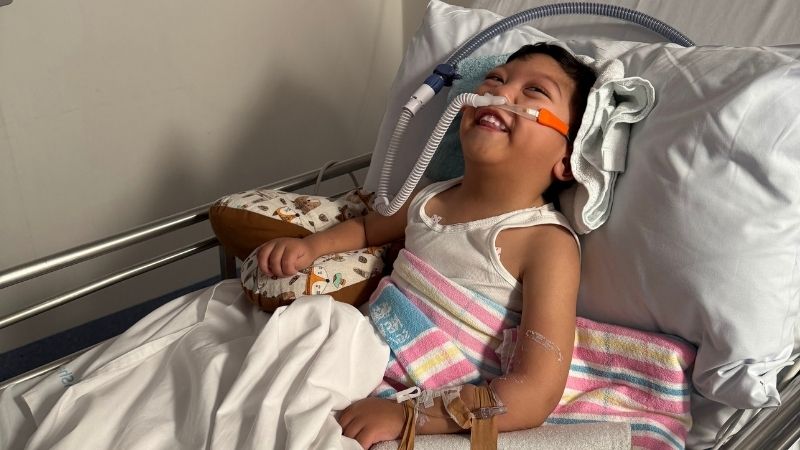
Lucas lives with complex medical needs. Coordinated medical care and specialist training support his journey - helping children like him access life-changing treatment.
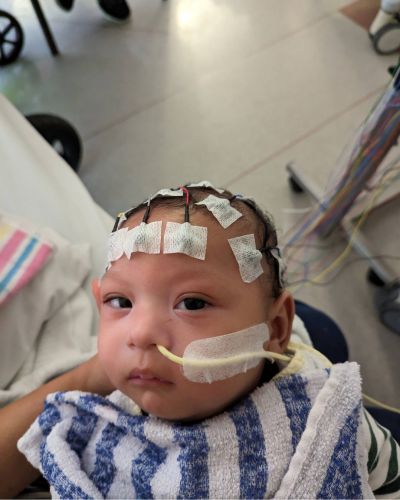
Lucas was born prematurely at 33 weeks. While premature babies can sometimes face early medical challenges, it quickly became clear that his condition was more serious.
He was later diagnosed with severe cerebral palsy caused by a significant brain abnormality, along with epilepsy and feeding difficulties.
When Dr Prerna Samtani first met Lucas, she was a General Medicine Fellow at The Children’s Hospital at Westmead, undertaking advanced training in paediatrics. At the time, Lucas was only a few months old.
“What stood out to me about Lucas was how early he had presented with a number of very complex medical issues,” she recalls.
“Children like Lucas often need input from many different specialists, along with nurses, and allied health teams. It takes a lot of coordination to bring all that care together.”
What does navigating complex daily care look like?
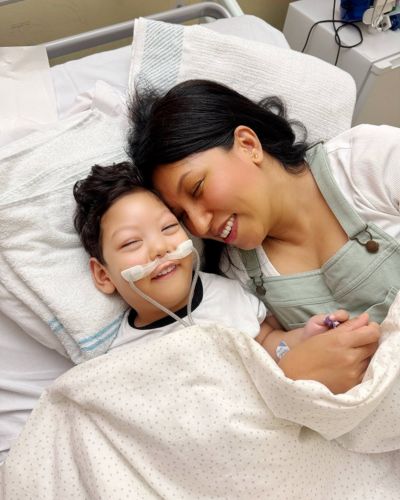
For Lucas and his family, daily life involves high levels of medical care and support. He relies on a feeding tube for nutrition and requires medication to manage his seizures. His parents have had to learn how to manage complex medical equipment, administer medications, and navigate a demanding schedule of appointments and therapies.
“It’s a very steep learning curve for families,” says Dr Samtani. “Parents suddenly find themselves responsible for things they never imagined they would have to do.”
Through it all, Lucas’ parents remained firmly focused on his care.
“They have handled everything with incredible grace,” Dr Samtani says. “Every piece of information, every diagnosis - even when the news was difficult - they kept moving forward. Their focus has always been on doing everything they can for Lucas.”
Coordinating care across clinical teams
As the General Medicine Fellow, Dr Samtani played a key role in helping coordinate Lucas’s care during multiple hospital admissions. General Medicine paediatricians often act as the central point of contact for families, bringing together the many different specialists involved in a child’s treatment.
“Our role is to look at the whole picture,” she explains.
“We work closely with families, help coordinate appointments, advocate for community supports like NDIS services, and ensure parents understand what’s happening with their child’s care.”
Looking ahead
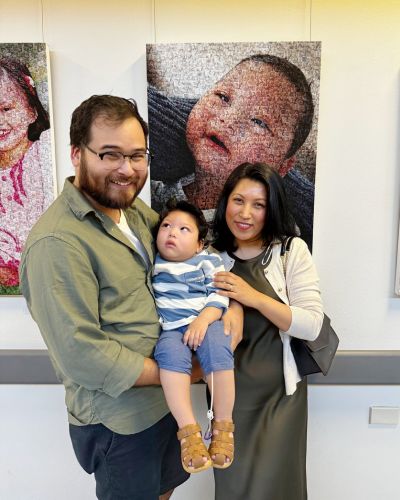
Today, Lucas continues to receive care closer to home at his local hospital, supported by his family and local medical team, while remaining connected to specialist services at CHW.
Experiences like Lucas’s are why fellowship training matters.
How does your support help?
Sydney Children’s Hospitals Foundation makes the Sydney Children’s Hospitals Network Fellowship Program possible, fully funding it thanks to the generosity of donors. This support equips doctors with the advanced skills needed to care for children with complex conditions and coordinate life-changing treatment.
Donate to the Sydney Sick Kids Appeal today and help fund vital research and clinical trials, so more children like Lucas can access the best possible care, and a future full of possibility.