In 2022, through the Greenlight pilot, SCHF put a spotlight on promising unfunded research, as a new way to highlight the depth of talent across Sydney Children’s Hospitals Network.
Drawing inspiration from the film industry, we gave SCHN clinician researchers training in how to pitch their ideas to philanthropists, created a digital platform to showcase their work, and gave our donors an opportunity to be more directly connected to the people behind the projects.
As well as securing vital funds to accelerate breakthrough projects, this gave us unique insights into the power of philanthropy to change lives and shape the future of paediatric care.
SCHN is uniquely positioned to deliver research that translates directly to the frontline delivery of better health outcomes for kids, and we can already see how many of the bold ideas uncovered in the Greenlight pilot are driving a real-world impact today, thanks to the vision of our generous supporters.
STOP2: A brighter future for children born with Tuberous Sclerosis Complex (TSC)
The STOP2 trial is helping change the outlook for babies born with Tuberous Sclerosis Complex (TSC), a rare condition that causes tumours to grow in the brain and other vital organs.
Early treatment can reduce the risk of seizures and long-term complications, yet promising therapies like oral mTOR inhibitors remain largely unavailable for children under the age of two.
Early access to treatment for children with TCS
Thanks to this donor-backed trial, families in NSW gained early access to these potentially life-changing medications. The trial aimed to restore critical brain activity in infants with TSC and several children have since continued treatment after their trial through extended drug access programs.
Advancing rare disease research in Australia
Beyond individual outcomes, STOP2 is driving broader impact. The STOP2 trial has shared results internationally, developed a new diagnostic test for TSC, and is helping establish Victoria’s first multidisciplinary TSC clinic.
And with the new Neurosciences Comprehensive Care and Research Centre soon to open at Sydney Children’s Hospital, Randwick, children with complex neurological conditions like TSC will benefit from even closer integration of research and clinical care, all under one innovative roof.
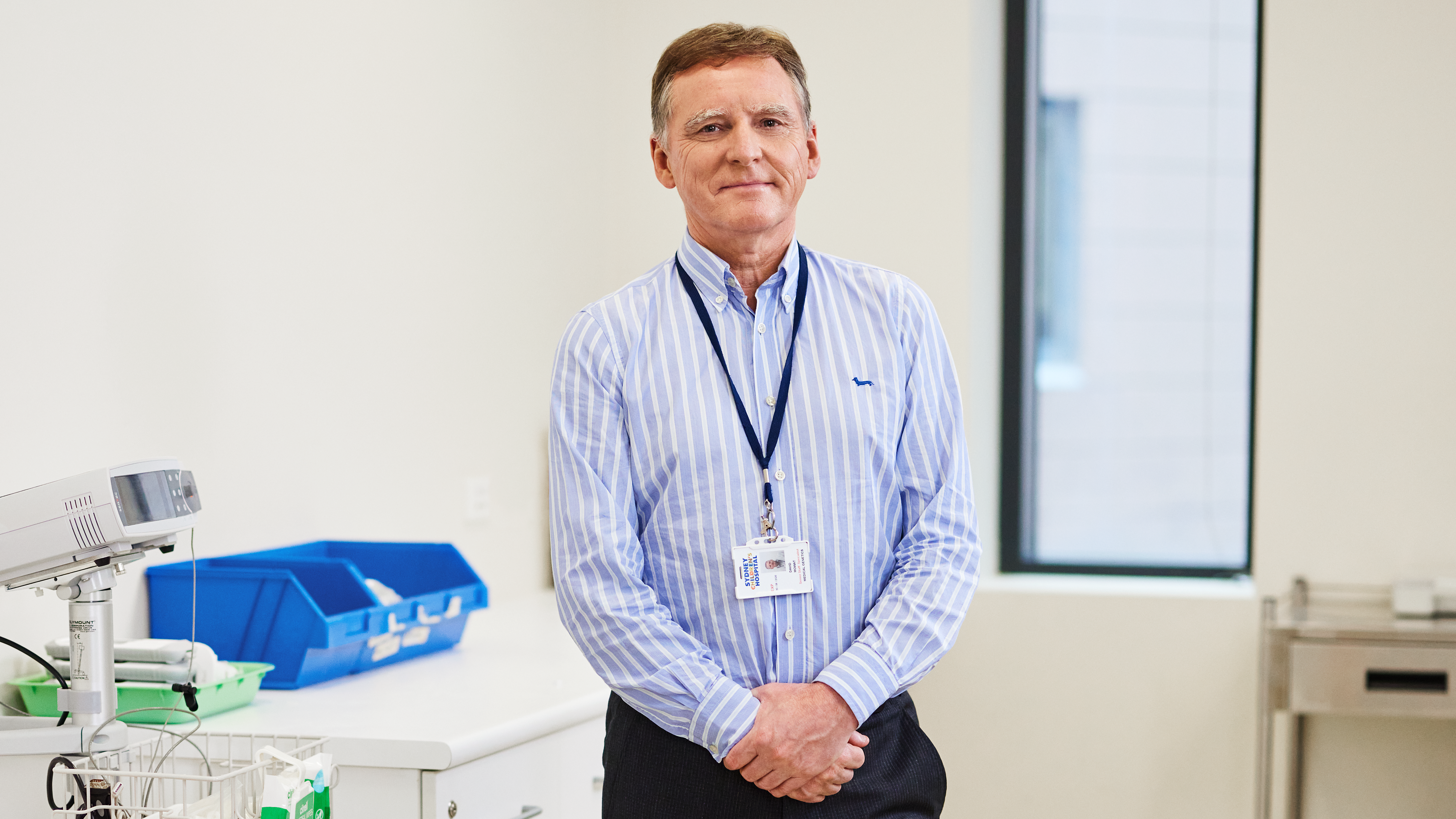
“If we can take a child from the destiny of severe non-verbal, multiple seizures to a child who goes to school, who can learn, can interact, communicate and be free of seizures for most of their life, that’s a massive impact on a family, massive. And those things are absolutely realistically achievable with an intervention.”
- Dr David Mowat, Head of the Centre for Clinical Genetics at Sydney Children’s Hospital, Randwick, and, Co-lead Tuberous Sclerosis Clinic
The future for kids like Otis living with TCS
Otis lives with Tuberous Sclerosis Complex (TSC), a rare genetic condition that causes tumours to grow in his brain and other organs. He has daily seizures and requires a feeding tube, but his strength and resilience always shine through.
For parents Katya and Brenton, the early days in neonatal intensive care were filled with uncertainty.
“The joy of meeting Otis was mixed with the grief of his diagnosis,” Katya says. “But we’ve never felt alone.”
Now, after countless visits, treatments and hospital stays, the family has reframed how they see hospital life.
“It’s where Otis gets the help he needs, and where we keep taking steps forward,” Brenton said.
Thanks to donor-supported research like the STOP2 trial, which is exploring new treatments for infants with TSC, families are facing the future with more hope than ever before.
GENEie® in action – A clinically validated AI tool for faster, more accurate diagnosis of genetic conditions
Professor Sandra Cooper and her team are developing an innovation that could change the way genetic conditions are diagnosed around the world.
Revolutionising the diagnosis of genetic conditions with machine learning
Inherited disorders caused by errors in RNA splicing variants affect around one in every 50 babies and are often difficult to diagnose. To help solve this, Professor Sandra Cooper led the development of GENEie®, a machine learning meta-analytical software that takes the guesswork from interpreting splicing variants, supporting genetic clinicians to diagnose genetic conditions.
From innovation to clinical validation
Now clinically validated with 100% diagnostic precision and patented in Australia, GENEie® is already being used by 200 people across 32 pathology laboratories in Australia, New Zealand, Europe, UK and the USA, generating around 5,000 diagnostic reports to date—on track to achieve widespread clinical adoption with the ultimate goal of improving diagnostic outcomes for thousands of families.
Work is also underway on GENEie2.0 that will be able to assess a much larger variety of genetic variants.
Pioneering gene therapy for brittle bone disease
Backed by early-stage funding through Greenlight and philanthropy, Associate Professor Aaron Schindeler and his team are working toward a potential gene therapy for osteogenesis imperfecta (OI), or brittle bone disease. This rare genetic condition causes extreme bone fragility and lifelong challenges for affected children and families.
Early breakthroughs in gene therapy
The team have developed the first disease-specific mouse model and successfully edited the faulty gene in human cells, and they are now testing ways to deliver treatment directly to bone. While more research is needed, these early breakthroughs are laying the foundation for a future where children with OI can be treated at the genetic level—not just managed but truly, meaningfully helped.
Philanthropy driving innovation
Gene therapy for OI is not yet ready for clinical translation, but thanks to philanthropy, this research is reducing uncertainty and moving us closer to a durable, disease-modifying treatment that will permanently change the outlook for children and families affected by this debilitating condition.
This transformation will not be achieved through one breakthrough alone, but through a sustained, long-term strategy that invests in the right people, platforms, and tools to accelerate translation from lab to clinic.
Learning from other gene therapy successes
We’ve already seen what’s possible when significant investment meets long-term vision. Gene therapy has changed the trajectory of diseases like spinal muscular atrophy, haemophilia, and inherited retinal disorders—powerful proof of what can happen when science and philanthropy align behind a clear goal. Now, we have the opportunity to do the same for OI.


 Movement of Many, fighting
  for the health and
  wellbeing of all children in an ever changing world.